
Throughout 2025, the American Sportfishing Association (ASA) remained actively engaged in federal and interstate fisheries management at the Mid-Atlantic Fishery Management Council, New England Fishery Management Council and the Atlantic States Marine Fisheries Commission (ASMFC). The year delivered measurable progress for recreational anglers, including increased access to key fisheries, continued rebuilding for iconic stocks and advances toward more stable recreational management, while also underscoring challenges that will shape future advocacy.
Recreational Management Reform for Key Mid-Atlantic Species
Recreational management reform for summer flounder, scup and black sea bass advanced in 2025 as the Mid-Atlantic Council and ASMFC jointly implemented a revised recreational measures-setting process. This reform addressed long-standing challenges related to recreational data uncertainty, annual regulatory volatility and measures that have not consistently reflected stock status.
Finalized in April 2025, the modified percent change approach provides greater stability by setting recreational measures for two years at a time while accounting for imprecision in recreational harvest data and changes in stock health. The 2025 management track assessments showed strong or improving biomass across all four species: summer flounder at 83% of target and increasing, scup at 323% of target, black sea bass at 284% of target, and bluefish projected to be rebuilt in 2025 ahead of schedule.
These improvements supported a positive outcome in the 2025 specifications process, resulting in a 20% increase in the recreational harvest limit for black sea bass. ASA remains engaged to ensure these gains translate into meaningful access for recreational anglers.
Rebuilding Progress and Balanced Access
Atlantic Bluefish
The 2025 management track assessment confirmed Atlantic bluefish remain ahead of schedule in their rebuilding plan. Overfishing has not occurred since 2017, recruitment is increasing and spawning stock biomass is projected to be rebuilt by 2025—three years ahead of schedule. Managers approved increased recreational fishing access for 2026, including a five-fish private-mode bag limit and a seven-fish for-hire limit, demonstrating rebuilding success delivering benefits to anglers.
Atlantic Striped Bass
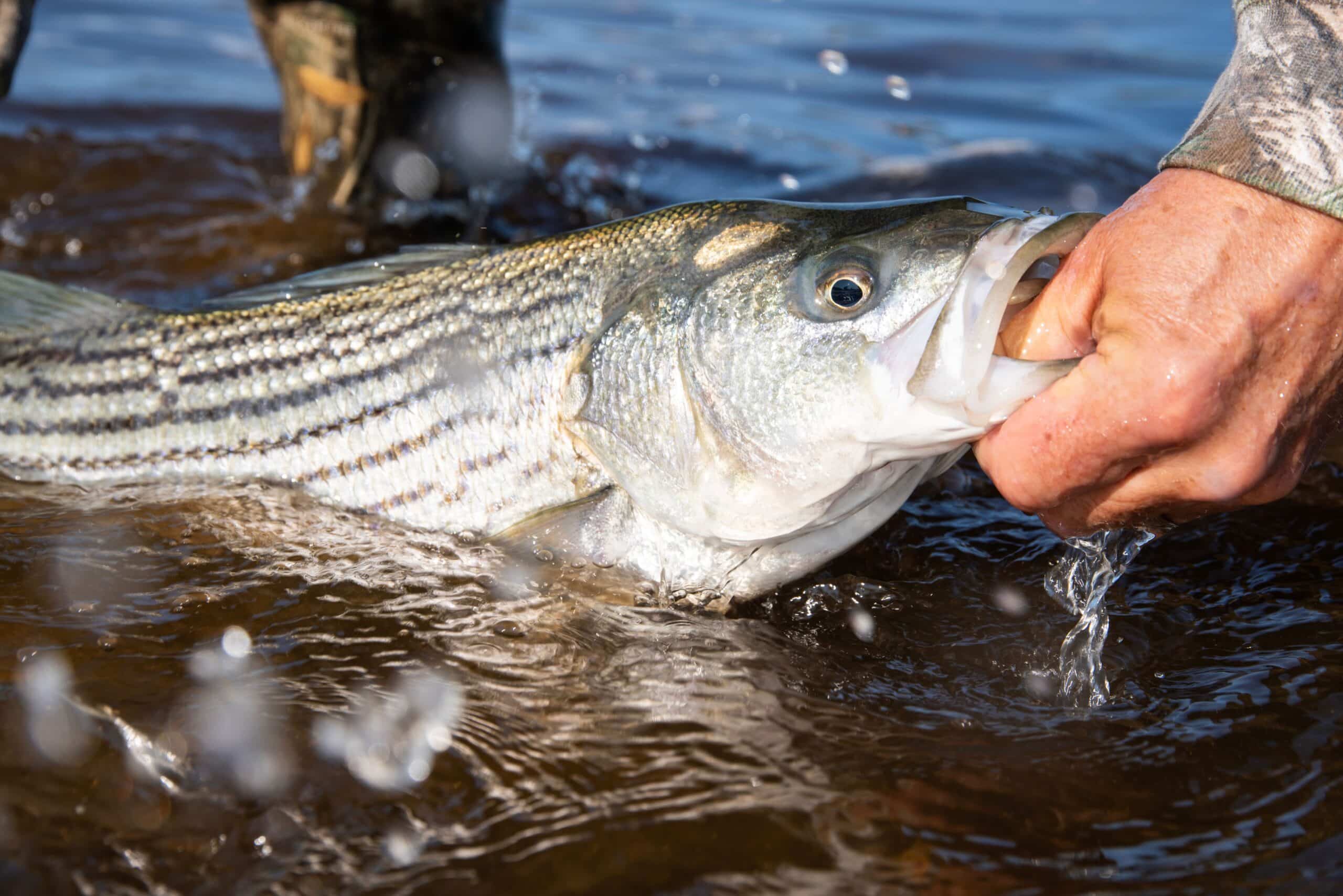
Atlantic striped bass management remained a central focus in 2025. Population rebuilding continued under highly restrictive measures, including a narrow slot limit and one fish bag limit that has reduced fishing mortality to a 30-year low. Based on this progress, the ASMFC voted 13–3 to maintain status quo measures until the next benchmark stock assessment, expected in mid-2027.
ASA will continue prioritizing this iconic fishery as ASMFC initiates a new working group to guide long-term management beyond 2029, with an emphasis on addressing poor Chesapeake Bay recruitment and reviewing biological reference points.
Atlantic Menhaden and Chesapeake Bay Management
Atlantic menhaden management in the Chesapeake Bay remained a focal point in 2025 due to the species’ critical role as forage for striped bass and other predators. Under ASMFC’s Bay-specific ecological reference point framework, management is explicitly designed to balance menhaden harvest with predator needs and ecosystem health.
ASA continued advocating for a management approach that prioritizes leaving more menhaden in the Bay, particularly during periods of peak predator demand. This Chesapeake Bay–focused management emphasis is intended to improve striped bass rebuilding prospects while supporting a more resilient and balanced estuarine ecosystem.
Offshore Wind Energy and Ocean Use
Offshore wind energy development along the Atlantic coast slowed significantly in 2025 following executive actions by the current administration. An executive order issued January 20, 2025 halted new and renewed offshore wind leases on the Outer Continental Shelf and initiated a review of federal leasing and permitting practices. Additional actions—including permit revocations, construction halts and the rescission of designated Wind Energy Areas—paused future lease sales across more than 3.5 million acres of the East Coast.
While the slowdown eased immediate pressure on fishing grounds, ASA continued advocating for meaningful stakeholder engagement, rigorous environmental review and recognition of recreational fishing as a protected ocean use.
Looking Ahead
Recreational Sector Separation
Development of a Recreational Sector Separation Amendment will remain a Mid-Atlantic priority. In 2025, managers advanced this effort with a focus on mode-specific management solutions for shore, private and for-hire anglers rather than separate ACLs—an approach supported by ASA. Further analysis and public input are expected in 2026.
New England Council Engagement and Atlantic Cod
In New England, ASA strengthened its engagement through appointment to the New England Council’s Recreational Advisory Panel during a pivotal transition in Atlantic cod management. Following recent assessments, cod will now be managed as four stock units. Although Amendment 25 was rejected by NOAA Fisheries in 2025 due to missing Magnuson-Stevens Act requirements, the Council extended emergency measures and began repackaging the action for resubmission. ASA will continue ensuring recreational interests are represented as long-term rebuilding strategies are refined.
Atlantic Herring and Tautog
Atlantic herring management remained challenging following an assessment confirming the stock is overfished with overfishing occurring. Although development of Amendment 10 was paused in 2025, it remains a priority action intended to address user conflicts with midwater trawl fisheries and forage availability.
Tautog management actions are expected to advance in the coming year under ASMFC’s adaptive management framework. ASA will remain engaged to support science-based measures that recognize regional differences and maintain recreational fishing access.
Conclusion
The Mid-Atlantic and New England regions made meaningful progress in 2025 through improved recreational management tools, rebuilding success for key stocks and continued advocacy on emerging ocean-use issues. As management challenges evolve, ASA remains committed to advancing balanced solutions that conserve fisheries while protecting the long-term future of recreational fishing and the coastal communities it supports.
Share This Article, Choose Your Platform:
Recent Posts

AUTHOR
Mike Waine
Atlantic Fisheries Policy Director