
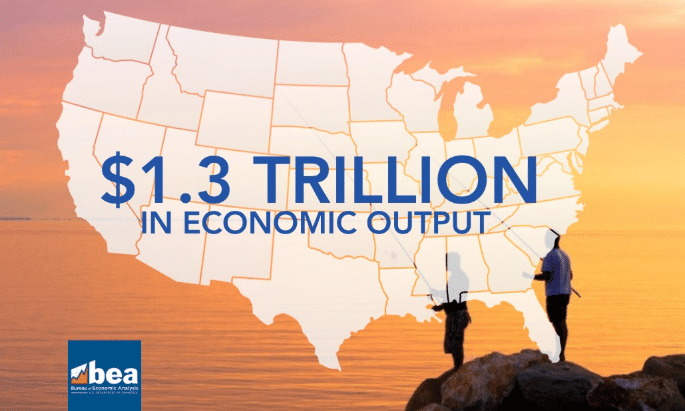
Yesterday, the U.S. Department of Commerce’s Bureau of Economic Analysis (BEA) released new data highlighting the economic impact of outdoor recreation in 2024. According to the report, the outdoor recreation industry generated $1.3 trillion, which marks an increase from 2023 ($1.2 trillion) and represents the largest outdoor recreation economy in history. The data reflects continued growth across the sector and underscores the important role outdoor recreation plays in supporting local economies and communities nationwide.
The Outdoor Recreation Roundtable (ORR) hosted a briefing on the report, featuring remarks from ORR Board Chair and ASA President and CEO, Glenn Hughes. “This new data shows that Americans continue to spend their time and money enjoying the outdoors,” said Hughes. “ORR will continue working to address the most pressing issues facing outdoor recreation, support conservation efforts, and ensure quality access for outdoor enthusiasts.”
The outdoor recreation industry remains an economic powerhouse, constituting 2.4% of the total GDP, creating 5.2 million jobs annually, and representing 3.2% of total national employment. Outdoor recreation has also continued to outpace many traditional industries, generating more economic activity than sectors such as farming, mining and utilities. Since the BEA began tracking the outdoor recreation economy, the industry has seen significant growth, reflecting the increasing importance of outdoor experiences to American lifestyles and communities.
When analyzed by category, fishing and boating top the list of conventional outdoor recreation industry contributors for the twelfth year in a row. Together, they generated $38.4 billion, with Florida ($4.4 billion), California ($3.3 billion), and Texas ($3.0 billion) serving as the largest contributors. Across much of the country, boating and fishing remain among the most widely participated outdoor activities and play a critical role in supporting local businesses, tourism and conservation funding.
The continued growth of the outdoor recreation sector shows it remains a priority for Americans across the country. ASA will continue advocating for policies that support outdoor recreation, including improved public access, increased conservation funding and better data to help define and manage recreational areas. Together, these efforts will help sustain America’s outdoor heritage for generations to come.
Share This Article, Choose Your Platform:
Recent Posts

AUTHOR