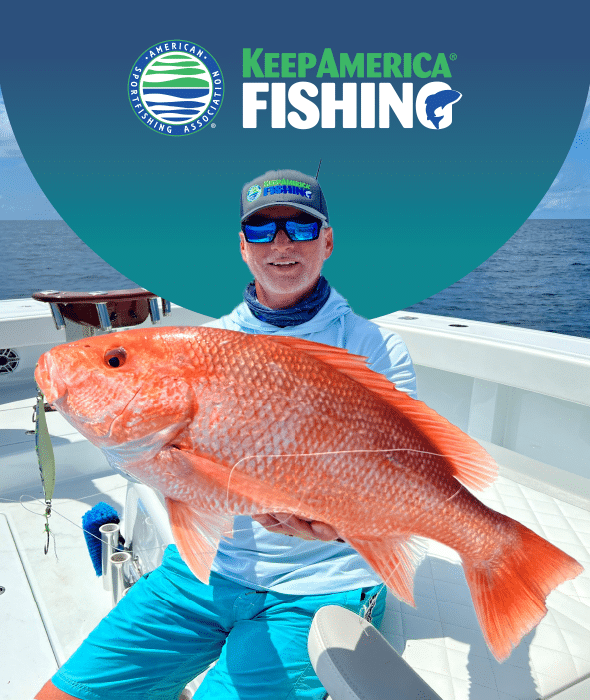
Alexandria, VA – February 11, 2026 – Today, the National Marine Fisheries Service (NOAA Fisheries) announced for public comment proposed Exempted Fishing Permit (EFP) requests for Florida, Georgia, South Carolina and North Carolina. This public comment period, which is expected to begin soon, launches another important step towards red snapper state management.
Under the leadership of each state, the EFP proposals would allow for red snapper recreational harvest seasons ranging from 39 days to 62 days this year. If approved, these changes would significantly increase recreational access to red snapper, which was subject to a meager two-day season last year under federal management. They would also allow for testing of state data collection systems, which hold tremendous potential in improving the accuracy and timeliness of recreational landings data.
“These EFP proposals will make important improvements to recreational data collection and management,” said Martha Guyas, Southeast Fisheries Policy Director. “We look forward to supporting these efforts and appreciate the state and federal leaders who have worked to move this issue forward. We also call on anglers throughout the region to weigh in on the proposals during the public comment period and express their strong support for state management.”
The Atlantic red snapper population is the healthiest it has been in recent history, a fact agreed upon by anglers and fisheries managers alike. Unfortunately, despite drastic improvements in stock numbers, anglers have been rewarded with only a few weekends of access during the last decade.
This disconnect stems from inaccurate catch and effort estimates at the federal level. NOAA Fisheries relies on its Marine Recreational Information Program (MRIP) to establish federal seasons, but this system is notoriously unreliable, with a recent study finding the survey overestimates catch data by 30-40%.
The state proposals would test improved recreational data collection programs designed specifically for red snapper and the snapper-grouper complex. These programs would collect important baseline data on recreational catch to inform future Atlantic red snapper management while providing an alternative to faulty MRIP estimates.
While collecting their data, states plan to offer markedly longer red snapper seasons for 2026. Florida’s proposed season would run for 39 days, and South Carolina’s would run for 62 days, with Georgia and North Carolina falling in-between. During this time, harvest would be constrained by each state using bag limits, aggregate limits, and size limits that would apply to all recreational anglers in state and federal waters.
Not only will increased access benefit anglers, but it will drastically improve opportunities for the tackle shops, marinas, hotels and other small businesses that are the backbone of coastal communities. Each year, recreational fishing across these states has a $27.1 billion economic impact while supporting more than 170,000 jobs. Increasing one of the most popular fisheries will only improve these numbers, fueled by the purchases of anglers eager to get on the water.
ASA is grateful to the South Atlantic governors for championing their EFP proposals. We would also like to thank all members of the Congressional Red Snapper task force, including co-chairs Rep. John Rutherford (R-FL), Rep. Buddy Carter (R-GA), Rep. Russell Fry (R-SC) and Rep. David Rouzer (R-NC) for enthusiastically advocating on behalf of South Atlantic recreational anglers.
In the coming days, ASA will provide more information on how anglers can provide input on the EFP proposals.
Share This Article, Choose Your Platform:
Recent Posts

AUTHOR