
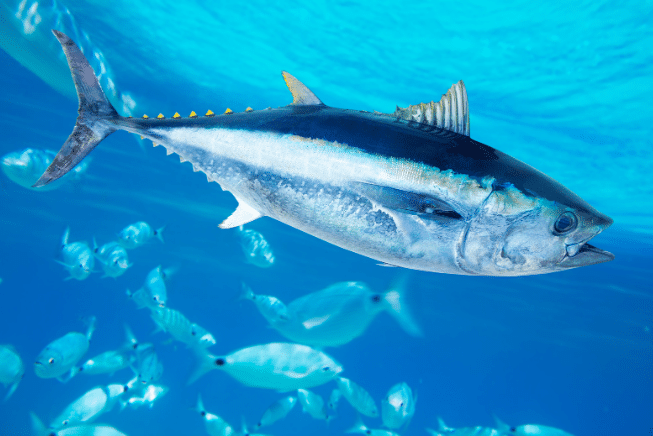
Alexandria, VA – August 20, 2026 – The American Sportfishing Association welcomed an agreement reached this week by the Joint Working Group of the Inter American Tropical Tuna Commission and Western and Central Pacific Fisheries Commission to advance a long term management procedure for Pacific bluefin tuna. The agreement must still be formally adopted by the IATTC and WCPFC before taking effect.
“Pacific bluefin tuna are an international fisheries success story,” said Larry Phillips, Pacific Fisheries Policy Director for the American Sportfishing Association and a member of the IATTC General Advisory Committee. “At its historic low, the stock was estimated at roughly 2 percent of its unfished spawning biomass. Today, spawning biomass is estimated at 23.2 percent of the unfished level and has increased rapidly since 2011. That recovery demonstrates what can be accomplished when nations work together, follow the science and make responsible management decisions.”
ASA applauds the U.S. delegation for recognizing the economic importance of recreational fishing and working to ensure the sector was appropriately considered throughout the negotiations. Importantly, recreational fishing in the eastern Pacific would remain separate from the commercial catch limit under the proposed management procedure.
The agreement does not go as far as the 70:30 approach supported by the United States and Mexico, which would have directed more fishing opportunity to fisheries on the eastern side of the Pacific, including those off the U.S. West Coast and Mexico. However, the agreement does begin a gradual shift in that direction. The eastern Pacific share will increase from 20 percent in 2027 and 2028, to 21 percent in 2029 and 2030, and to 22 percent in 2031 and 2032.
“I applaud this agreement and appreciate the commitment of the U.S. delegation to conservation and recreational fishing access,” Phillips said. “Pacific bluefin support anglers, charter operators, tackle businesses, boat manufacturers and coastal communities throughout the West Coast. This is a great example of how nations can successfully manage a highly migratory species while providing sustainable fishing opportunities and economic benefits.”
The Joint Working Group agreement now moves to the IATTC and WCPFC for formal adoption. ASA will remain engaged with NOAA Fisheries and the U.S. delegation as the management procedure moves through that process.
Share This Article, Choose Your Platform:
Recent Posts

AUTHOR