
Key Segments for Growth Show Record High Participation & Outings Overall are Up
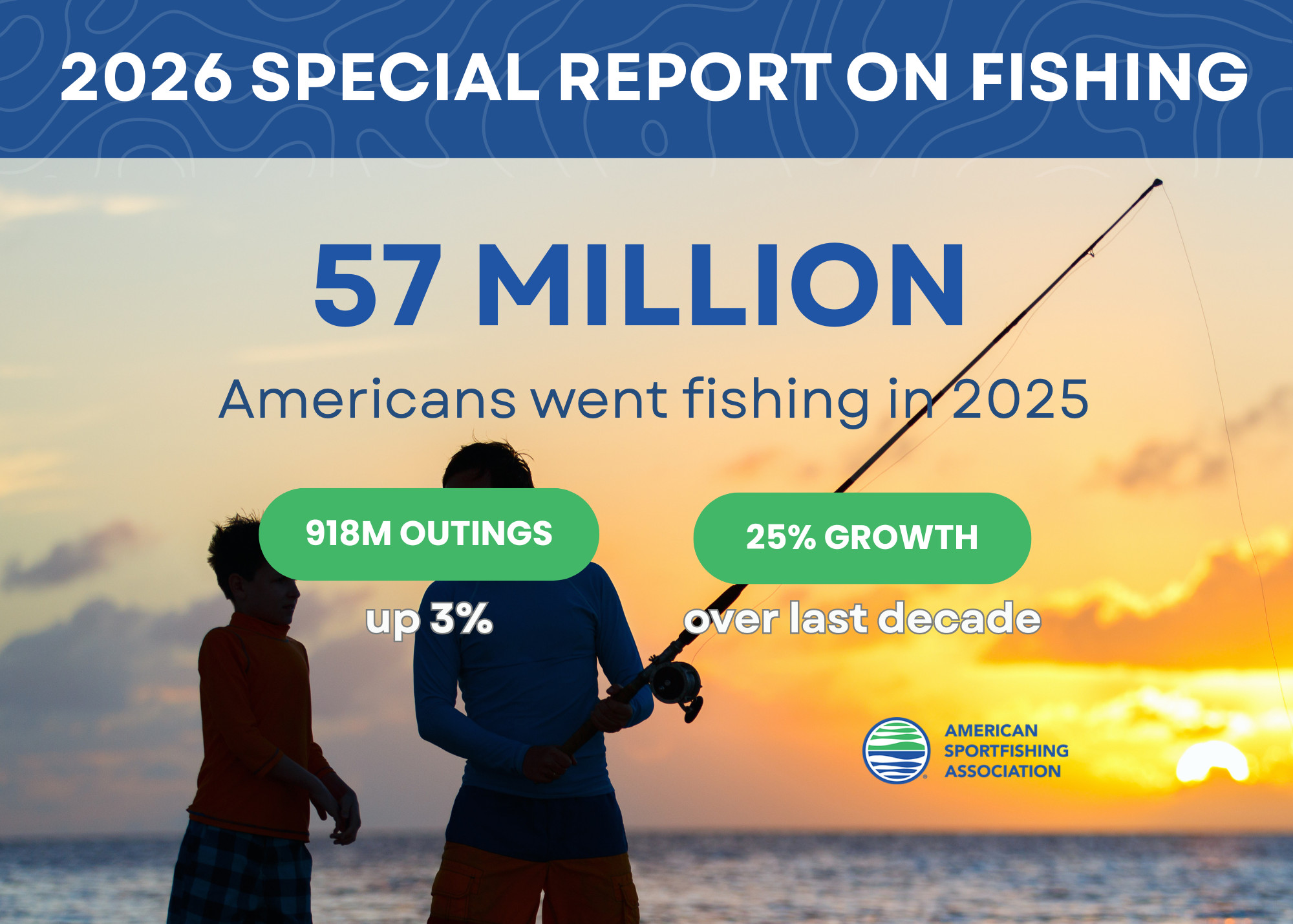
ALEXANDRIA, VA – July 27, 2026 – The American Sportfishing Association (ASA) today announced the results of the 2026 Special Report on Fishing. Fifty-seven million Americans representing 18% of the U.S. population went fishing in 2025 – up nearly 25% from a decade ago. ASA President and CEO, Glenn Hughes, shared the new figures with the 700+ ICAST Industry Breakfast attendees where he celebrated fishing participation trends and outlined opportunities for the industry to better engage customers and grow their base.
“In 2025, fishing continued to bring Americans together, connecting people to the outdoors, sustaining families, and strengthening the communities and economies that depend on it,” said Hughes. “In addition to the positive 10-year trendline data, the report shows key segments for fishing participation growth hit record highs and outings overall are up.”
According to the new report, catching fish was not the only reason Americans went fishing. They also fished to enjoy nature, escape everyday stress, and spend time with family and friends. The most cited barriers to enjoyment were crowded fishing spots and the discomfort of being outdoors, followed by not catching fish, unclean waters, and the cost of gear.
ADDITIONAL KEY FINDINGS
- Total fishing outings grew by 3 percent to 918 million in 2025.
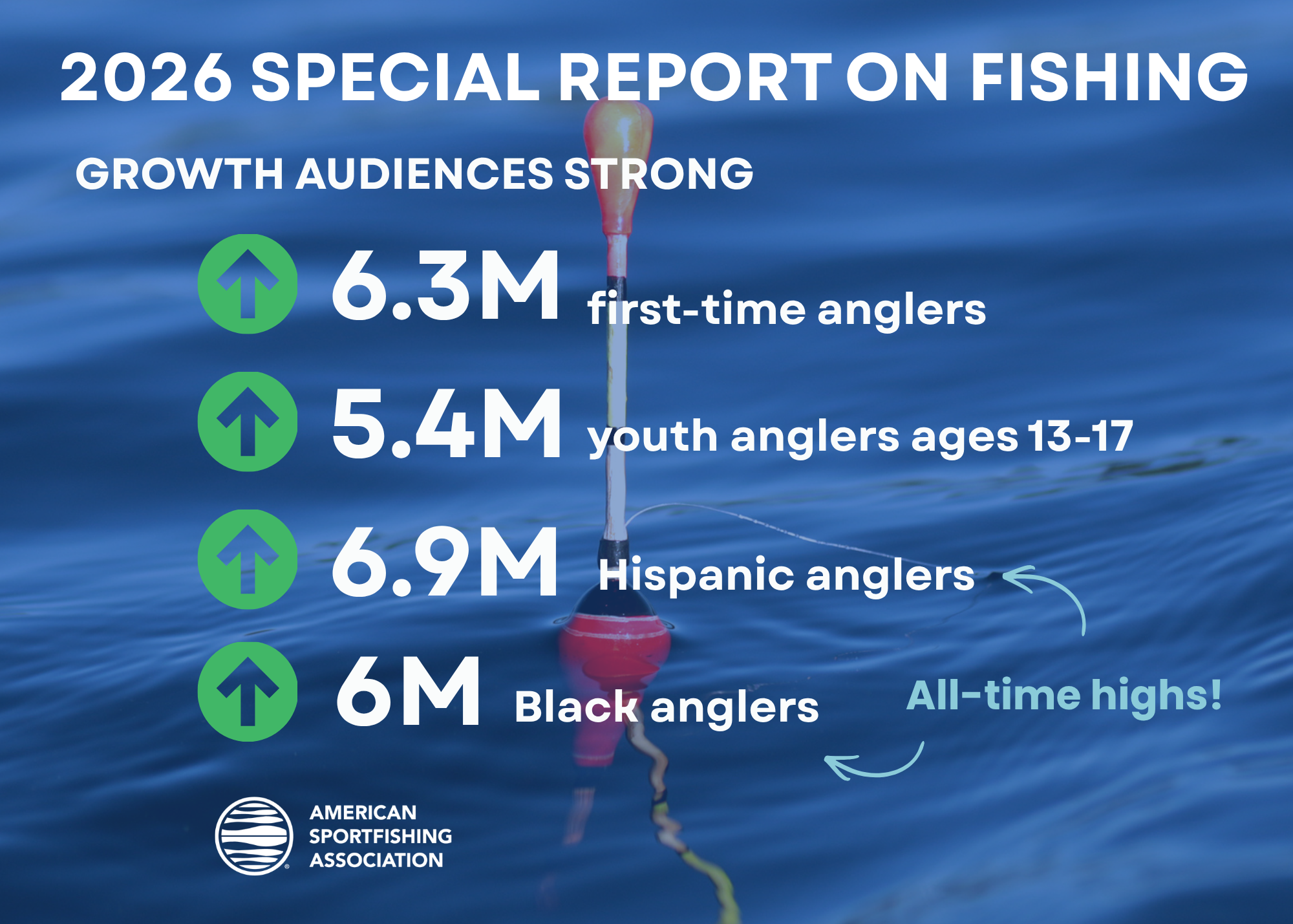
- 6.3 million Americans tried fishing for the first time in 2025, representing 11 percent of total participants, up from 9 percent in 2024.
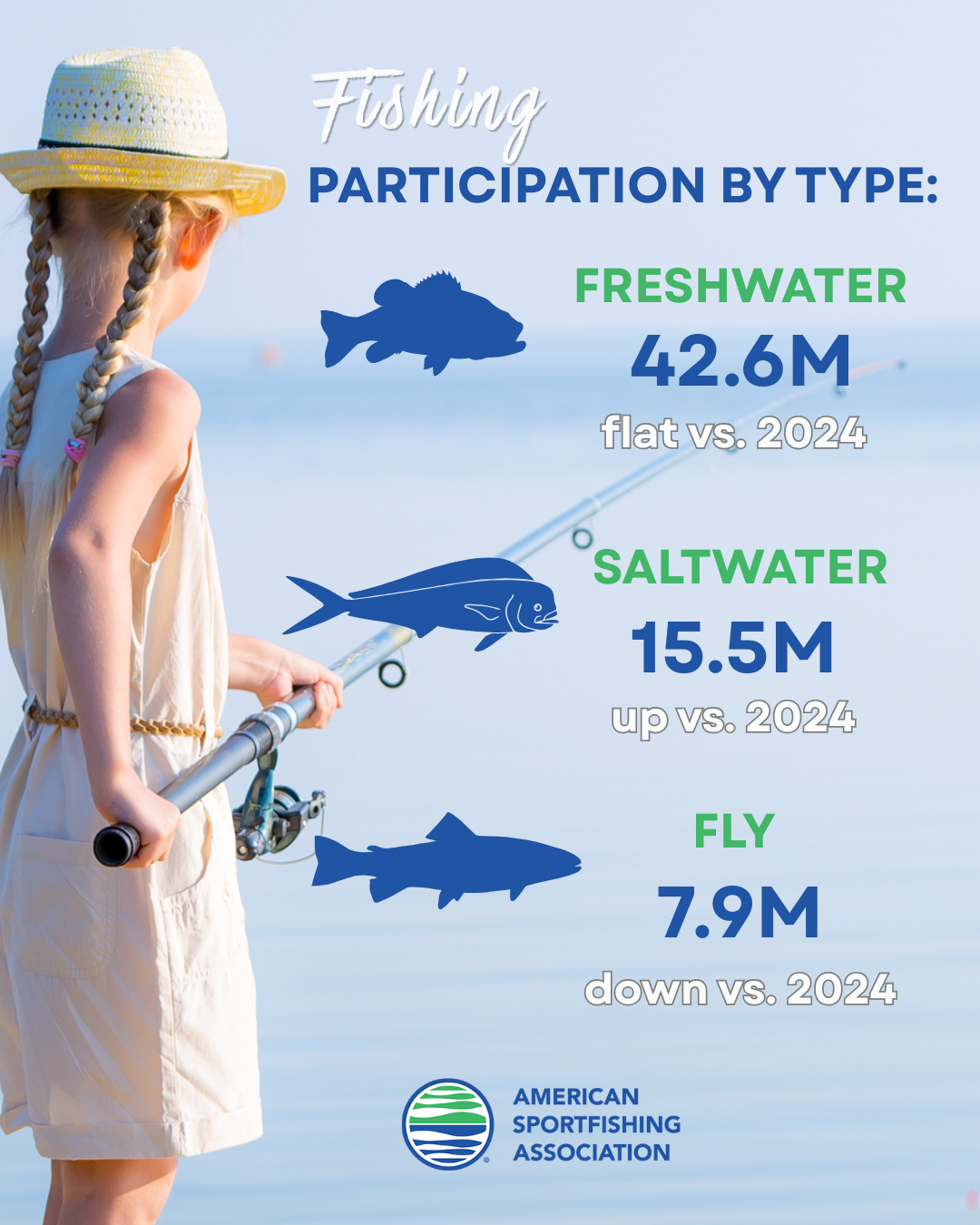
- 42.6 million Americans ages 6 and over went freshwater fishing in 2025, holding steady for the fourth consecutive year.
- Saltwater fishing reached a record 15.5 million, up 400,000 from the year prior and the fourth consecutive record high.
- Fly fishing decreased slightly in 2025 to 7.9 million, still representing nearly 2 million more fly anglers vs. a decade earlier.
- Youth participation (ages 6-12) is down slightly in 2025, however participation among ages 13-17 rose from 5.2 million to 5.4 million, and the participation rate ticked up from 24 percent to 25 percent.
- Nearly 6 million Black Americans fished in 2025, the highest number since tracking began in 2007 and an increase of 400,000 from the prior year.
- Hispanic anglers doubled over the past decade, climbing from 3.4 million in 2015 to an all-time high of 6.9 million in 2025.
- Female participation dipped slightly in 2025 to 21.1 million, however the long-term trajectory remains strong as female anglers grew by 5.4 million (a 34% increase) over the past decade.
OPPORTUNITIES FOR INDUSTRY
“Even with 2025’s gains, the opportunities for sustained growth are unmistakable,” Hughes said. “Millions of people are curious about fishing, youth participation remains the strongest predictor of lifelong involvement, and better engagement can help us win back anglers who drop out.”
Special Report data shows 10% of Americans overall (and 15% of kids) who did not fish, thought about going fishing. Eighty-six percent of current fishing participants fished before the age of 12, emphasizing the critical importance of youth participation.
Ninety-nine percent of those who fished in 2025 expect to fish in 2026, however, 19 million who fished in 2024 did not return in 2025. Angler churn has been worsening over the last several years, underscoring the growing importance of customer engagement and loyalty programs. In April, ASA’s Fish America Foundation announced its inaugural R3 grant program to tackle recruitment, retention and reactivation of anglers by identifying best practices that can be replicated and scaled to the benefit of the entire industry.
The Special Report on Fishing is the most comprehensive research on fishing participation, providing an annual assessment of angler demographics, participation trends and motivations from more than 18,000 respondents. ASA partnered with the Outdoor Industry Association to produce this long-running research report which was supported by the Recreational Boating & Fishing Foundation for 18 years.
Click here to read the full report and download the 2026 infographic.
Share This Article, Choose Your Platform:
Recent Posts

AUTHOR